Exercise and the Brain: Why Movement Matters MORE as we Age
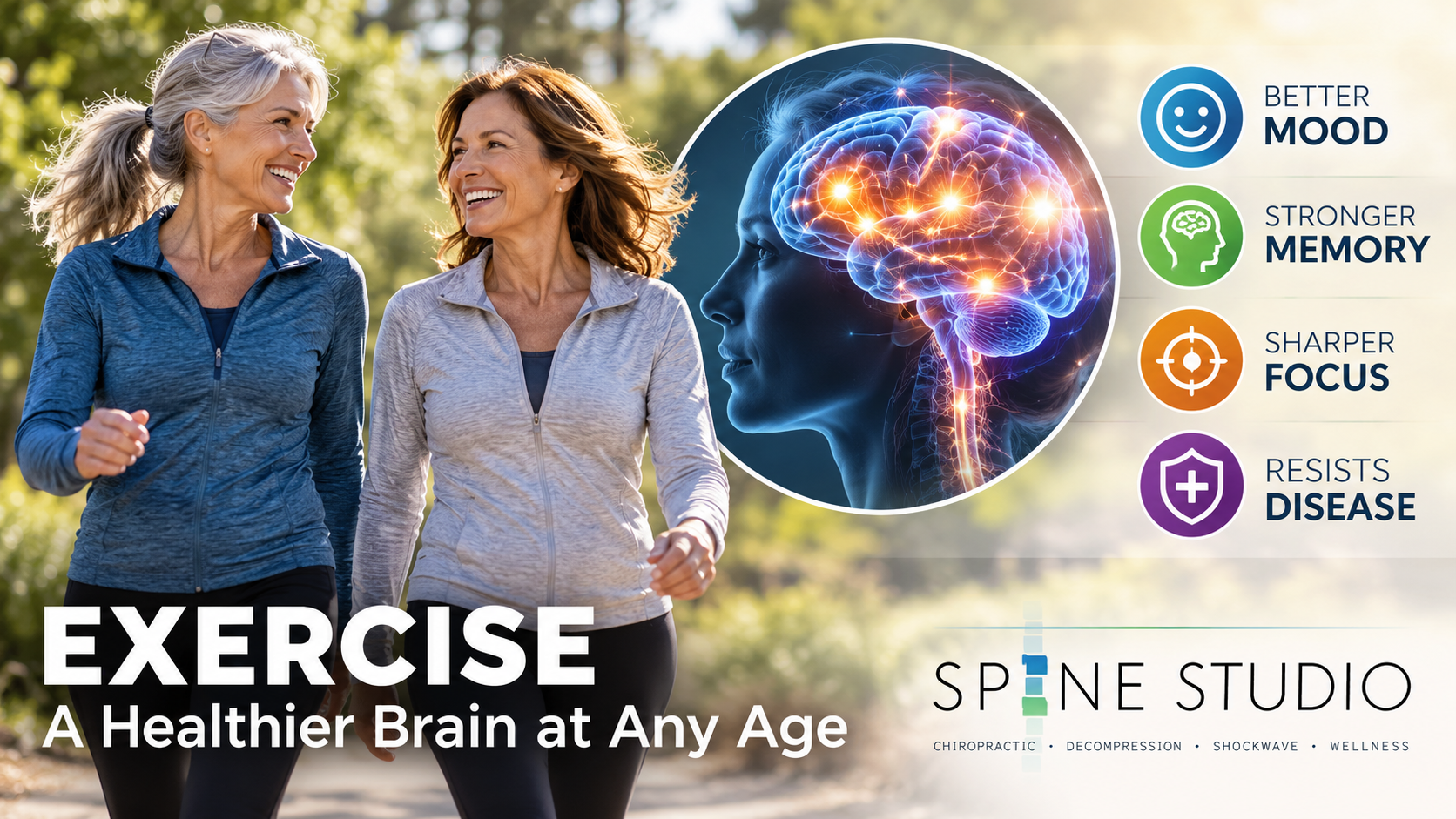
We usually think of exercise as something we do for our muscles, heart, weight, or mobility.
But exercise also has powerful effects on the brain.
And as we age, those effects may become even more important.
MOOD
Exercise can help reduce symptoms of both depression and anxiety.
A 2025 systematic review and meta-analysis found that both aerobic and resistance exercise improved symptoms of depression and anxiety.
Why?
Exercise influences several systems involved in emotional health, including brain signaling, stress regulation, sleep, and the release of chemicals associated with mood.
The important point is simple:
Moving your body can help change how you feel.
MEMORY
Exercise also appears to help protect memory and overall cognitive function.
A major 2025 umbrella review looked at 133 systematic reviews involving more than 258,000 participants.
Exercise significantly improved:
- Overall cognition
- Memory
- Executive function
Interestingly, benefits were seen even with light- and moderate-intensity exercise.
Resistance training may help too. A recent review in adults over 60 found improvements in overall cognition, working memory, verbal learning, and spatial memory.
FOCUS
Your brain has to organize, plan, switch attention, make decisions, and stay mentally flexible.
Those abilities are often grouped under the term executive function.
Exercise has been shown to improve executive function as well as general cognition and memory.
So exercise is not just about preserving memory.
It may also help support the ability to:
- Concentrate
- Plan
- Make decisions
- Stay mentally sharp
- Handle multiple tasks
RESISTING DISEASE
Regular physical activity may also help reduce the risk of age-related brain disease.
A recent meta-analysis involving more than 4 million people found that higher levels of physical activity were associated with about a 20% lower risk of all-cause dementia, along with lower risks of Alzheimer’s disease and vascular dementia.
Another large meta-analysis found regular physical activity was associated with about a 25% lower risk of developing dementia.
Exercise also appears to influence immune function as we age, although that area is still being studied. Research suggests regular activity may help preserve immune competence and reduce some aspects of age-related immune decline.
You Don’t Have to Train Like an Athlete
The good news is that exercise does not have to be extreme.
Walking counts.
Strength training counts.
Cycling counts.
Swimming counts.
Yoga counts.
Playing pickleball counts.
The best exercise is usually the one you can do consistently.
And consistency matters far more than perfection.
But First — You Have to Be Able to Move
There is one practical problem with telling people to exercise more:
To move, you have to feel like moving.
And ideally, you need to be able to do it without paying for it afterward with pain, stiffness, or soreness.
That is where Spine Studio comes in.
Our goal is to help remove some of the physical barriers that make staying active harder.
Depending on the problem, that may include:
- Chiropractic care
- Massage therapy
- Spinal decompression
- Focused or radial shockwave therapy
The goal is not simply to help you hurt less.
It is to help you move better so you can keep doing the things that support your health, your brain, and your quality of life as you age.