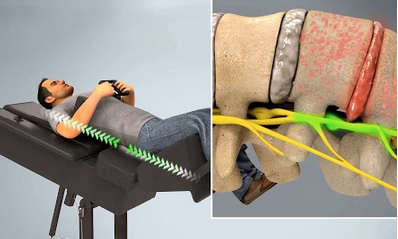
How Does Spinal Decompression Work?
When spinal discs become compressed, bulged or degenerated, they can place stress on nearby joints and nerves. This may contribute to back pain, neck pain, sciatica, numbness, tingling or pain that travels into the arms or legs.
Non-surgical Spinal Decompression Therapy uses gentle, controlled intermittent traction to reduce pressure on the spine and create a better environment for discs and nerves to recover.
The treatment applies a carefully controlled series of pulling and relaxing forces to the spine. Rather than simply stretching the back, decompression is designed to gradually unload the targeted spinal segment and reduce mechanical stress.
Spinal Decompression Goals
- Reduce pressure on bulged and degenerated spinal discs
- Decrease stress on irritated or compressed nerves
- Improve movement of fluid and nutrients within the disc
- Reduce pain, stiffness, and muscle guarding
- Improve spinal mobility and function
- Support the body’s natural healing process
What to Expect
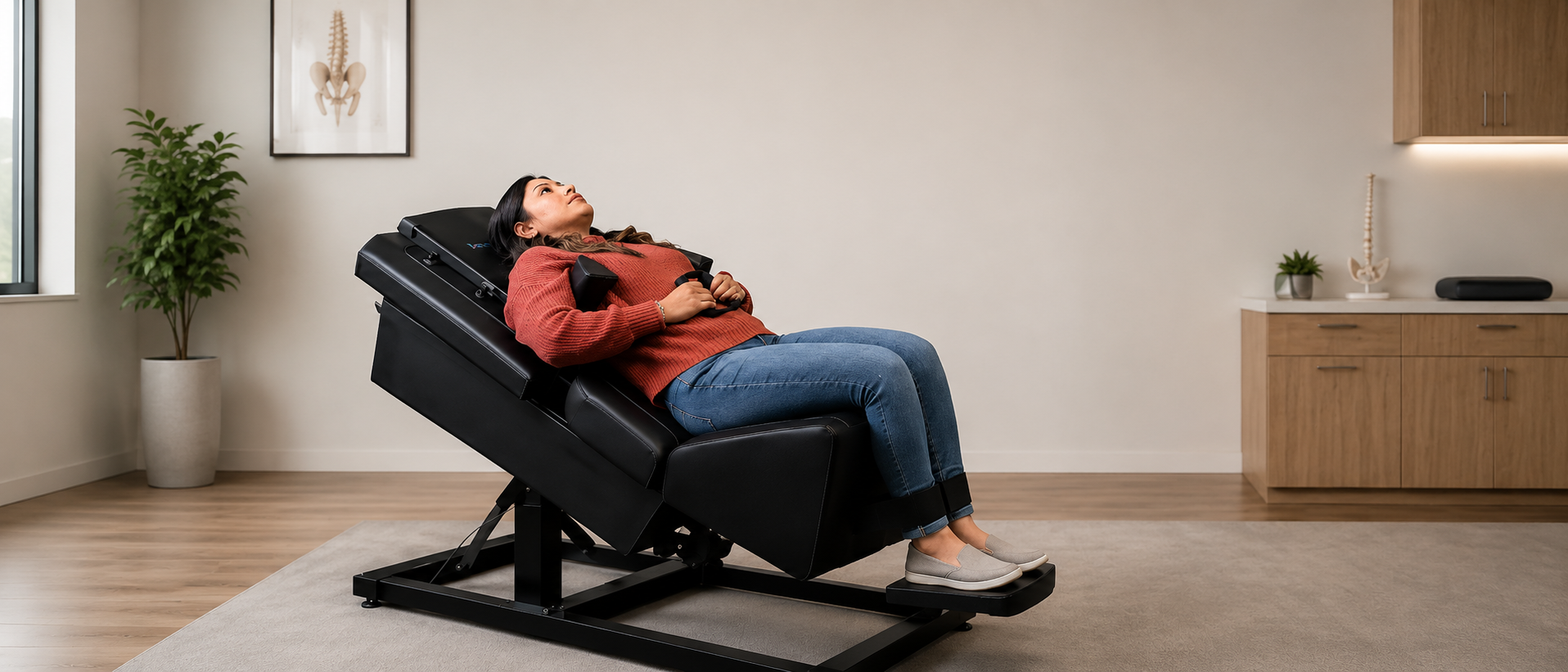
Treatment is performed while you are positioned on a specialized decompression table. Most patients describe the treatment as a gentle stretching or unloading sensation.
Sessions are typically comfortable and require no surgery, injections, or medication. Because disc and nerve pressure often develop over time, decompression is generally performed as a series of treatments designed to gradually reduce pressure. While immediate relief is common, lasting change occurs over the course of weeks as the involved tissues begin to respond.
Common Conditions Treated by Spinal Decompression
- Chronic Lower Back & Neck Pain
- Bulging or Herniated Discs
- Sciatica & Radiating Leg Pain
- Arm Pain Related to Nerve Irritation
- Degenerative Disc Conditions
- Disc-Related Stiffness & Restricted Motion
- Numbness & Tingling Associated With Nerve Compression
- Chronic Spinal Compression
- Certain Cases of Spinal Stenosis
Supporting Research Studies
Ramos G, Martin W. Effects of vertebral axial decompression on intradiscal pressure. Journal of Neurosurgery. 1994.
Choi J, et al. Randomized clinical study evaluating nonsurgical spinal decompression, pain improvement, and lumbar disc herniation volume. 2022.
Amjad F, et al. Randomized clinical trial evaluating nonsurgical spinal decompression combined with physical therapy for lumbar radiculopathy. BMC Musculoskeletal Disorders. 2022.
Vanti C, et al. Systematic review and meta-analysis evaluating mechanical traction for lumbar radiculopathy. 2021.
Individual results vary. Spinal decompression is not appropriate for every patient or condition. A clinical evaluation is necessary to determine candidacy.